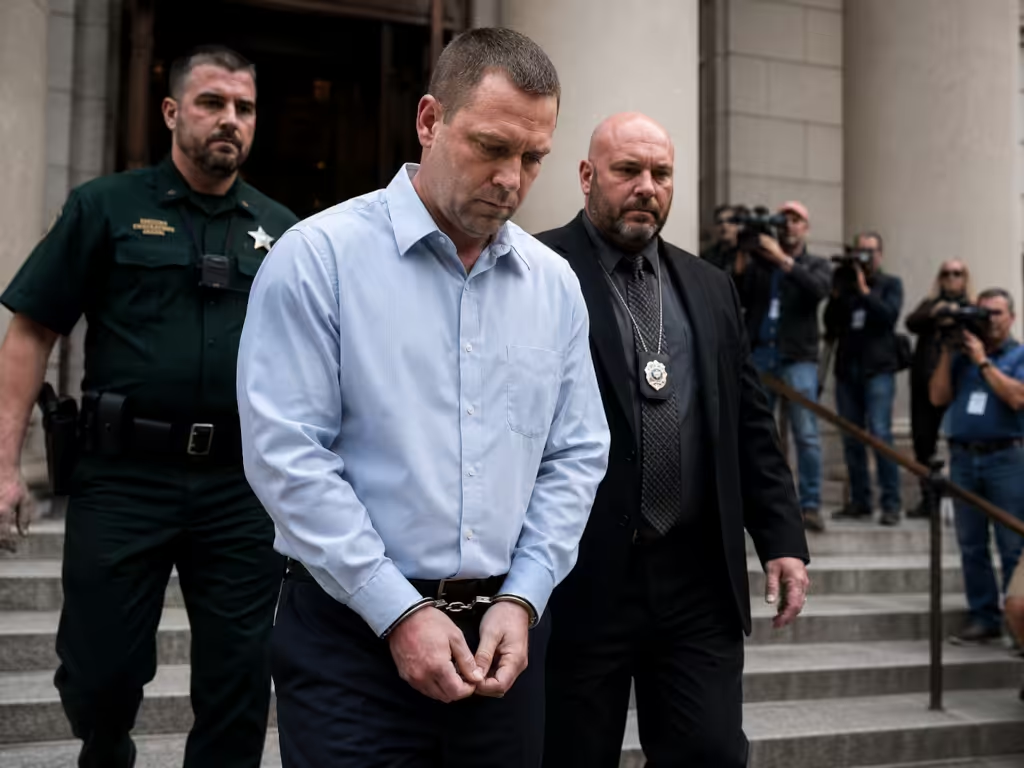
Former Florida Highway Patrol Trooper Joshua Grady Earrey Sentenced to Nine Years in Federal Prison for Drug Trafficking, Fraud, and Firearms Offenses.
Former Florida Highway Patrol Trooper and DEA Task Force Officer Joshua Grady Earrey was sentenced to nine years in federal prison after pleading guilty to federal crimes tied to drug trafficking, fraud, and illegal firearm possession.
According to the U.S. Attorney’s Office for the Middle District of Florida, Earrey, 46, of Jacksonville, was sentenced by U.S. District Judge Wendy W. Berger for conspiring to distribute narcotics, conspiring to defraud the United States, and possessing firearms and ammunition while addicted to illegal narcotics.
Earrey entered his guilty plea on April 4, 2024. As part of the case, he also agreed to forfeit or abandon money, firearms, and ammunition connected to the offenses.
Federal prosecutors said Earrey’s crimes were especially serious because they occurred while he was employed as a Florida Highway Patrol trooper and designated as a Drug Enforcement Administration Task Force Officer. According to court documents cited by prosecutors, Earrey and a co-conspirator engaged in corrupt activity involving stolen money and illegal drugs seized as evidence during criminal investigations.
The government said Earrey and his co-conspirator stole more than 1,000 pounds of marijuana from evidence and then covered up the theft by filing false paperwork claiming the drugs had been destroyed. Prosecutors also said they stole a kilogram of cocaine from evidence and gave it to a drug dealer to sell for them.
According to the same federal release, Earrey’s conduct also included providing illegal drugs, including fentanyl and cocaine, to others for distribution. Prosecutors further said he provided ammunition to a person he knew was a convicted murderer in exchange for opiates.
The U.S. Department of Justice Office of the Inspector General reported that Earrey was sentenced to 108 months of imprisonment followed by four years of supervised release. The OIG also stated that Earrey conspired with former DEA Task Force Officer Darrell Hickox to steal cash, marijuana, and cocaine seized during DEA investigations.
Local reporting from News4JAX noted that Earrey was a 22-year veteran of the Florida Highway Patrol. The report also stated that he was assigned to a DEA task force and had previously faced up to 60 years in prison before receiving the nine-year sentence.
The case is a stunning fall for a trooper once publicly honored by the state. The Florida Department of Highway Safety and Motor Vehicles’ own website shows that Earrey was named the 2009 Florida Highway Patrol Trooper of the Year after his role in apprehending a carjacking suspect in Jacksonville.
That prior recognition now stands in sharp contrast to the federal case against him. Instead of protecting the public from drug traffickers, prosecutors said Earrey used his position inside law enforcement to steal evidence, move drugs back onto the street, falsify records, and personally benefit from the very crimes he was supposed to investigate.
“Law enforcement officers who operate as though they are above the law betray the badge and the citizens they swore to protect,” FBI Jacksonville Acting Special Agent in Charge Hubert Reynolds said in the federal sentencing announcement. “This case exemplifies the FBI’s commitment to holding public servants accountable if they violate the very laws they promised to uphold.”
The case was investigated by the FBI and IRS Criminal Investigation, with assistance from U.S. Customs and Border Protection. Federal prosecutors also thanked the Florida Highway Patrol, DEA, and ATF for their cooperation.
For a former award-winning Florida Highway Patrol trooper to end up sentenced to federal prison for drug trafficking, fraud, and illegal firearm possession is exactly the kind of case that damages public confidence in law enforcement. Earrey was not accused of a minor lapse in judgment. Federal prosecutors described a pattern of corruption involving stolen evidence, falsified paperwork, drugs, cash, ammunition, and abuse of trusted law enforcement access.