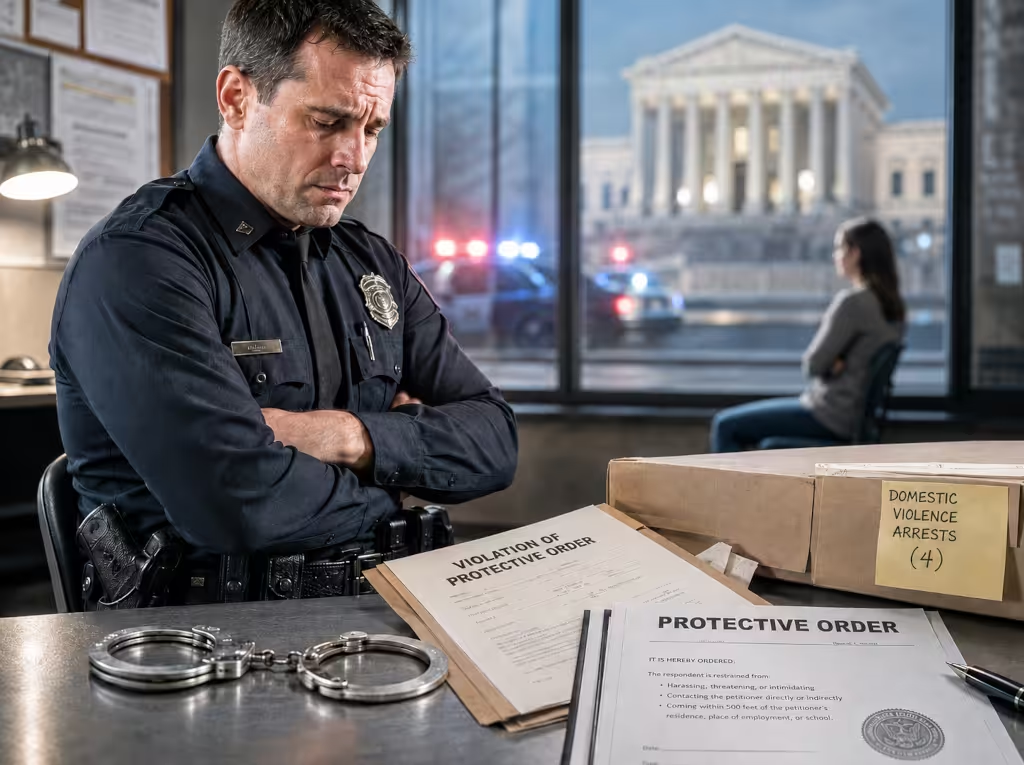
Former New London Police Department Officer Julio Gil-Martinez was fired in April 2025 after being arrested four times in a series of domestic violence and protective-order-related cases that began in November 2024.
The case raised serious questions about officer conduct, accountability, protective orders, and the standard expected of those entrusted with enforcing the law. Gil-Martinez was originally placed on administrative leave after his first arrest, but the situation continued to escalate through additional arrests in January and March 2025.
According to CT Post reporting, New London police confirmed that Gil-Martinez was arrested in November 2024 and charged with second-degree threatening, third-degree assault, second-degree strangulation, first-degree unlawful restraint, and interfering with an emergency call. Police said the victim had gone to the Waterford Police Department to report the incident, which was alleged to have occurred at a residence in New London.
The November arrest was only the beginning. In January 2025, Gil-Martinez was arrested again while already on administrative leave. According to CT Insider, police alleged that he violated an active protective order identifying the woman as the protected party. He was charged with violation of a protective order and first-degree unlawful restraint, and police also said he was charged with disorderly conduct and second-degree criminal mischief.
By March 2025, the allegations had continued. WFSB reported that Gil-Martinez was arrested for a third time after the victim reported that he had allegedly been showing up at her home and workplace and that she believed he may have been tracking her.
Just days later, Waterford police served another warrant. According to CT Insider, Gil-Martinez’s fourth arrest stemmed from two incidents in which he was accused of coming near the woman and her Waterford home despite a court order requiring him to stay away from the home and at least 100 yards away from her. He was charged with two counts of violating a protective order in that case.
After the fourth arrest, the City of New London terminated Gil-Martinez. The New Haven Register reported that Mayor Michael Passero said Gil-Martinez was fired for just cause after several off-duty incidents resulted in criminal charges and “egregious violations” of the police department’s general duty manual. The mayor also cited untruthfulness during internal investigations.
Passero said the conduct showed an apparent disregard for Gil-Martinez’s oath of office and the standards expected of police professionals. The mayor said the conduct compromised the integrity of the department and created alarm, distrust, and misgivings within the New London community.
The department later moved to take the matter beyond termination. According to the New Haven Register, New London Police Chief Brian Wright submitted a request to the Connecticut Police Officer Standards and Training Council to consider revoking Gil-Martinez’s police certification.
As of later reporting, the criminal cases had not resulted in a public conviction. In October 2025, CT Insider reported that Gil-Martinez was not due back in court until September 26, 2028, indicating that he had likely been admitted to a supervised pretrial diversionary program. CT Insider reported that the cases had been statutorily sealed and that successful completion of the program could lead to dismissal and erasure of the charges.
That does not erase the public accountability issue. Police officers are given authority, discretion, public trust, and access to sensitive situations involving vulnerable people. When an officer is repeatedly accused of violence, stalking, protective-order violations, or dishonesty during internal investigations, the issue is not merely personal misconduct. It becomes a matter of public confidence in the badge itself.
Gil-Martinez is presumed innocent unless and until proven guilty in a court of law. However, his firing, the repeated arrests, the alleged violations of protective orders, and the department’s request for decertification make this case a significant example of why police misconduct records should remain visible to the public.