INGFIELD, Illinois — Sonya Massey called 911 for help in the early morning hours of July 6, 2024. Instead of being protected, the 36-year-old woman was shot to death inside her own home by Sangamon County Sheriff’s Deputy Sean Grayson.
According to information released by Sangamon County, deputies responded at approximately 12:50 a.m. to a 911 call in the 2800 block of Hoover Avenue in Springfield. Grayson and another deputy made contact with Massey at her residence. During the encounter, Grayson fired his weapon, striking and killing her.
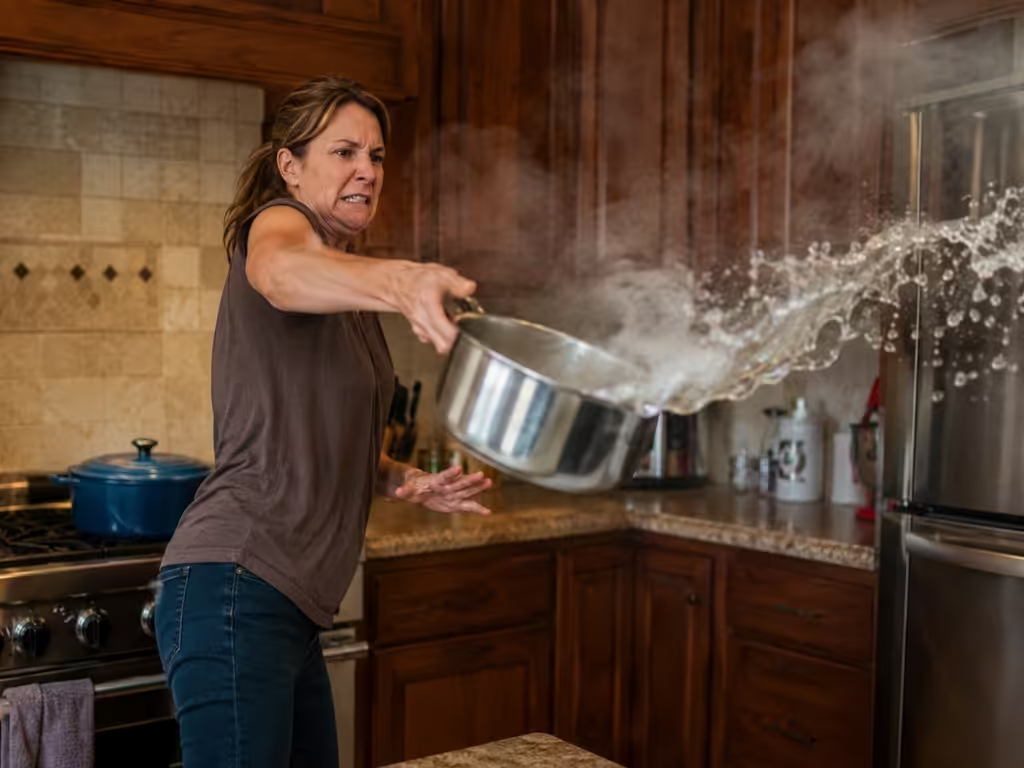
The case became a national example of how a call for help can turn deadly when the wrong officer walks through the door. Massey had reportedly called 911 because she believed there may have been a prowler outside her home. Instead, the encounter escalated over a pot of hot water in her kitchen.
After reviewing the Illinois State Police investigation, including body-worn camera footage, the Sangamon County State’s Attorney’s Office determined the evidence did not support a finding that Grayson was justified in using deadly force. A grand jury indicted Grayson on three counts of first-degree murder, aggravated battery with a firearm, and official misconduct.
Grayson was fired by the Sangamon County Sheriff’s Office after the shooting. The former deputy’s background also came under heavy scrutiny after reporting by the Invisible Institute and partner newsrooms documented concerns about his prior law enforcement history and the broader problem of officers moving between agencies despite warning signs.
In October 2025, a jury convicted Grayson of second-degree murder. On January 29, 2026, he was sentenced to 20 years in prison, the maximum sentence for that conviction, according to Reuters.
Massey’s family also reached a $10 million settlement with Sangamon County and the Sangamon County Sheriff’s Office, according to Capitol News Illinois. While no amount of money can undo her death, the settlement marked one form of civil accountability for a killing that should never have happened.
The fallout from Massey’s killing extended beyond the criminal case. The U.S. Department of Justice announced an agreement with Sangamon County, the sheriff’s office, and county dispatch officials requiring policy reviews, training, community engagement, and development of a mobile crisis team program involving trained behavioral health staff. The DOJ stated that the agreement did not constitute an admission of liability and that it had not reached a finding of discrimination. More details are available from the Department of Justice.
Illinois lawmakers also responded with police hiring reforms. In August 2025, Gov. J.B. Pritzker signed legislation inspired by Massey’s death requiring stronger background checks and more complete disclosure of prior employment records when law enforcement officers seek new jobs. Capitol News Illinois reported that the law was drafted in response to the shooting and concerns about Grayson’s hiring history.
Sonya Massey should not have become another name associated with police violence. She called for help. She was inside her own home. She was killed by the deputy who responded. Grayson’s conviction and prison sentence provide a measure of accountability, but the case remains a brutal reminder that police hiring, training, crisis response, and accountability systems can fail with fatal consequences.
Sources
- Sangamon County: Sonya Massey Information
- Reuters: Sean Grayson Sentenced To 20 Years
- Capitol News Illinois: $10 Million Settlement
- U.S. Department of Justice: Sangamon County Agreement
- Invisible Institute: Sean Grayson Misconduct Reporting
- Capitol News Illinois: Police Hiring Reform Signed In Sonya Massey’s Honor